| Status: | Active, open to new members |
| Leader: |
Robert Sedgley
|
| Group email: | History & Appreciation of Art group historyofart@u3aoliva.org |
| When: | Monthly on Tuesday afternoons 5:00 PM-7:00 PM |
| Venue: | Biblioteca de L'Envic |
| Cost: | Free |
The activity of the group is to further our understanding and appreciation of art through an illustrated talk from the leader and with contributions from the group. All are welcome; whether expert or not come and join in the conversation, find out more about the wonderful and surprising world of art.
We have now been running for about twelve years and have come in our chronological survey up to the beginning of the Twentieth Century, and are looking at the revolution in the visual arts that we call Modernism. For new members who wish to acquire a background understanding of what went before I recommend reading the notes of previous meetings. These are complete from the earliest paintings on the walls of caves, up to the early moderns: Fauvism, Cubism, Expressionism and Futurism. However, this is by no means compulsory – we are not an exam group!
All are welcome; whether expert or not come and join in the conversation, find out more about the wonderful and surprising world of art!
Leader: Robert Sedgley
Next meeting
The next meeting will be on Tuesday 6th October
Edward Hopper
(1882 – 1967) was an American realist painter and printmaker. He is one of America's most renowned artists, known for his skill in depicting modern American life and landscapes. Hopper's work, including oil paintings, watercolours, and etcings, predominantly explores themes of loneliness and isolation within American urban and rural settings. His most famous painting, Nighthawks (1942), exemplifies his focus on quiet, introspective scenes from everyday life. Hopper's technique, marked by a composition of form and use of light to evoke mood, has been influential in the art world and popular culture. His paintings, often set in the architectural landscapes of New York or the serene environments of New England, convey a sense of narrative depth and emotional resonance, making him a pivotal figure in American Realism. Hopper created subdued drama out of commonplace subjects layered with a poetic meaning, inviting narrative interpretations.
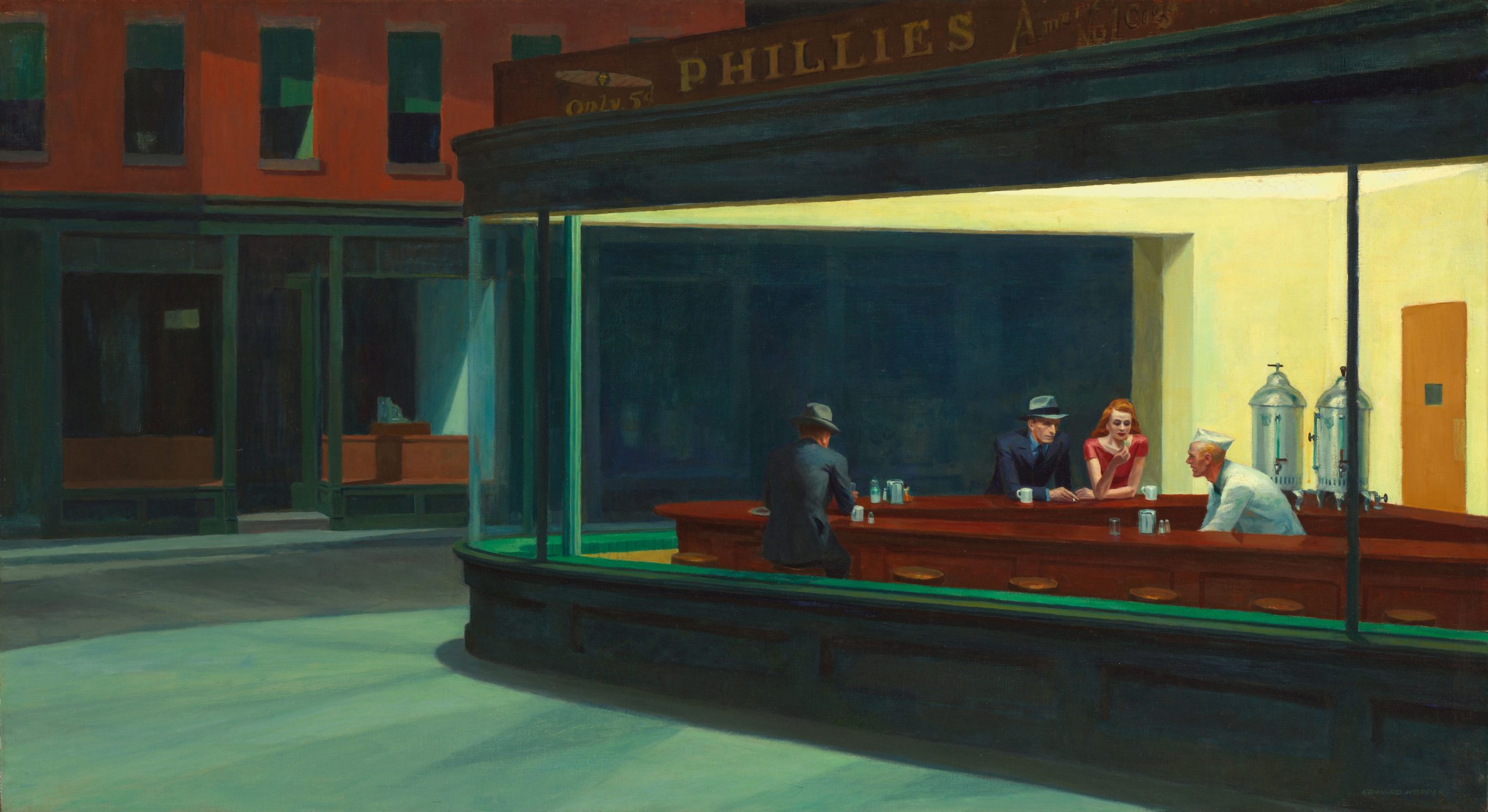
"Great art is the outward expression of an inner life in the artist, and this inner life will result in his personal vision of the world. No amount of skilful invention can replace the essential element of imagination. One of the weaknesses of much abstract painting is the attempt to substitute the inventions of the human intellect for a private imaginative conception." – Hopper
"The inner life of a human being is a vast and varied realm and does not concern itself alone with stimulating arrangements of colour, form and design.” – Hopper
"The term life used in art is something not to be held in contempt, for it implies all of existence and the province of art is to react to it and not to shun it." – Hopper
"Painting will have to deal more fully and less obliquely with life and nature's phenomena before it can again become great." – Hopper
“You are asking me to do something which is perhaps as difficult to do as painting is, that is to explain painting with words.” – Hopper
"All I wanted to do was to paint sunlight on the side of a house."– Hopper